

Check out the full episode on YouTube.
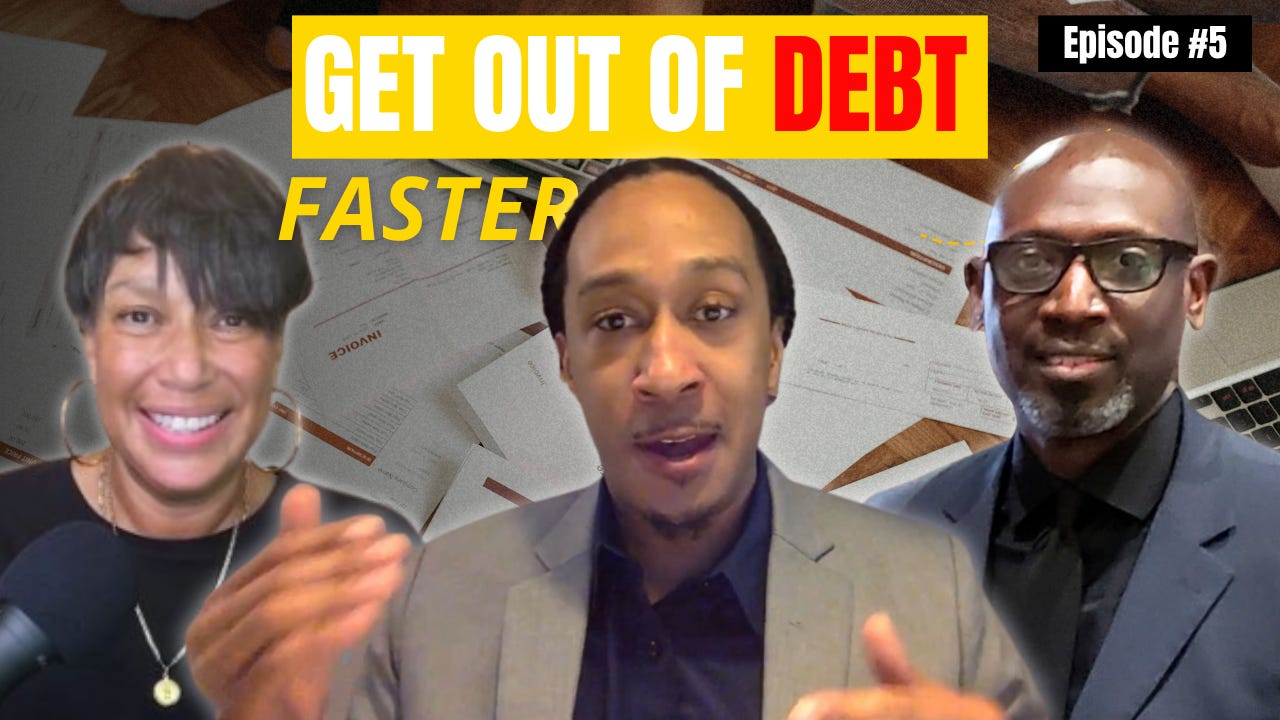
Even when life throws you a curveball like job loss, the right strategy can transform your financial future faster than you think.
Did You Know? Most people don’t realize how much debt they actually have until they face a financial crisis—just like Steve Shumpert, who discovered he was $75,000 in debt only after getting laid off from his IT job.
“You have to learn how to give every dollar some kind of assignment. You have to prioritize your spending and you’ll be surprised how much extra money you have when it’s just not going out the window on the unaccounted for.” — Steve Shumpert, Financial Advisor with Edward Jones

Your 3-Step Debt Elimination Plan
1. Face Your Financial Reality
Before you can fix your debt problem, you need to know exactly what you’re dealing with. Steve’s wake-up call came when he got laid off and finally added up all his debts—six credit cards, car loans, student loans, a personal line of credit, and a small personal loan. Create a complete spreadsheet listing every debt, interest rate, and balance. Order them from smallest to largest amount.
2. Attack Debts
Using the Snowball Method Focus all extra money on the smallest debt while paying minimums on everything else. Steve chose this approach over the avalanche method because “you gotta believe that you can get it done. You gotta experience some small wins in order to keep going.” Each paid-off debt builds momentum and confidence for tackling the next one.
💰 Real Example: Steve’s first coaching client used this exact method to pay off close to $50,000 in just 11 months, proving the strategy works for others too!
3. Create a Cash Flow Spending Plan
Stop wondering where your money goes by giving every dollar an assignment before you spend it. As Steve puts it, “when you don’t give a dollar a name, meaning an assignment, it’ll give itself one, called spent.” This isn’t about restriction—it’s about intentional priorities that align with your debt elimination goals.
Key Principles: Budget is like GPS for your money—without it, you won’t reach your destination efficiently. Track your spending patterns first, then assign purposes to every dollar. Small consistent changes create massive results over time.
Thanks for reading The WI$E Retirement ! Subscribe for free to receive new posts and support my work.
Top of Form
Bottom of Form
🎯 Your Action Steps
This Week
Add up every single debt you have (including amounts and interest rates)
List debts from smallest to largest balance
Look at your last three months of bank statements
Track every expense by category (eating out, groceries, entertainment, bills)
This Month
Create your complete debt elimination spreadsheet
Choose your smallest debt to attack first
Develop your cash flow spending plan
Put extra money only toward your smallest debt
Track your progress and celebrate your first debt payoff
Questions for Reflection
Ask Yourself
What financial wake-up call am I avoiding right now?
How much debt do I actually have when I add it all up?
What would financial freedom mean for my life choices?
What legacy do I want to leave regarding money management?
Discuss with Family
How can we work together to eliminate debt faster?
What spending habits are we doing out of routine rather than intention?
How can we celebrate small wins while staying focused on the bigger goal?